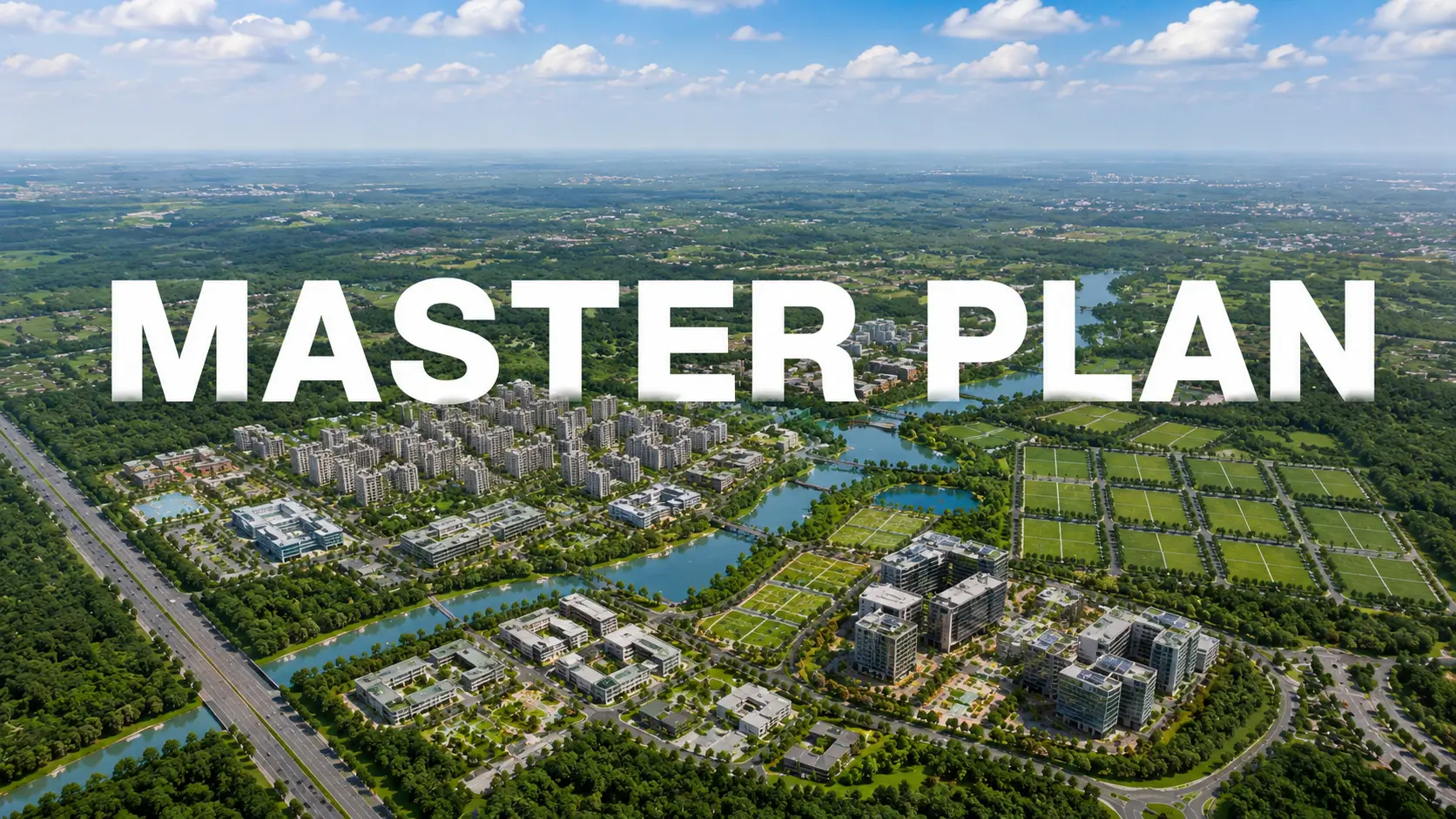
Century Immencity master plan analysis — how the 52-acre site plan Jakkur distributes residential, commercial, retail, hospitality and culture across the township.
Why the Master Plan Is the Most Important Document
In a single-tower residential launch, the brochure is the most important document a buyer can study. In a 52-acre mixed-use township, the master plan is. A Century Immencity master plan analysis reveals decisions made by the developer that will shape resident lifestyle, commercial tenant attraction, retail vitality, and long-term asset value for decades. The master plan answers questions that brochure imagery cannot — where does the residential parcel sit relative to the office park, how does the retail spine connect to the residential entry, what is the pedestrian-priority routing through the township, and where do the cultural and hospitality zones land. Understanding these decisions before booking is one of the highest-value pieces of due diligence available for a township buyer.
The 52-Acre Footprint Broken Down
Century Immencity's 52 acres distribute across five functional categories. The residential parcel — approximately 6 acres carrying Century Astoria's five towers and 334 ultra-luxury residences. The office park — approximately 12 to 14 acres of Grade A commercial floor plates designed for LEED Gold certification. The retail and dining spine — approximately 6 to 8 acres of high-street format storefronts, food and beverage venues, and lifestyle retail anchors. The hospitality and cultural zones — approximately 4 to 6 acres dedicated to hotel inventory, performance venues, and gallery programming. The remaining footprint covers landscaped open space, the central pedestrian spine, vehicular circulation, and the integrated metro station. The Century Immencity master plan analysis on a structured basis reveals this distribution and how each component supports the others operationally.
Township Master Plan Bangalore Standards
Township master plan Bangalore standards have evolved over the last decade. Older Bangalore townships organised components sequentially around a residential core with retail bolted onto the perimeter. The contemporary best-practice standard — and the one Century Immencity follows — organises components around a central public realm spine, with pedestrian-priority routing connecting residential, commercial, retail, and cultural zones without residents needing to cross vehicular roadways for most daily activities. The Century Immencity master plan analysis shows the township applying this principle systematically rather than as a marketing claim.
52 Acre Site Plan Jakkur — The Connectivity Logic
The 52 acre site plan Jakkur Century Immencity operates with a specific connectivity logic. The residential parcel sits on one side of the central spine with the office park positioned within walking distance on the opposite side. The retail spine runs through the middle, capturing footfall from both residents heading to work and office workers heading to lunch or evening dining. The cultural and hospitality zones sit at the intersection of the major pedestrian flows. This geography is what makes the walk-to-work and live-work-play narrative operationally credible rather than purely marketing-driven, and the Century Immencity master plan analysis at this level is the most useful detail buyers can extract from the public documentation.
Mixed Use Zoning Strategy
Mixed use zoning across Century Immencity is calibrated to support functional separation without geographic isolation. Residential floor plates are separated from commercial floor plates by both elevation and orientation to maintain residential privacy. Retail is placed at podium level along the central spine to maximise visibility while preventing retail noise transmission into residential zones. Office park parking and service routing is separated from residential vehicular access. The Century Immencity master plan analysis reveals how these zoning decisions reduce the friction that typically affects standalone mixed-use developments, where residential lifestyle is compromised by adjacent commercial operations.
Master Plan Reference
Component | Approx. Acres | Purpose |
|---|---|---|
Residential (Century Astoria) | ~ 6 acres | 5 towers · 334 ultra-luxury residences |
Office Park (Grade A Commercial) | ~ 12-14 acres | LEED Gold target · walk-to-work for residents |
High-Street Retail & Dining | ~ 6-8 acres | F&B, lifestyle retail, premium anchors |
Hospitality (Hotel) | ~ 2-3 acres | Branded hospitality inventory |
Cultural Programming | ~ 2-3 acres | Performance, gallery, public realm |
Landscaped Open Space + Pedestrian Spine | ~ 12-14 acres | Central spine + green buffers |
Metro Station Integration | Within footprint | Phase 2B alignment |
Vehicular Circulation + Service | Remaining | Roads, basements, service routing |
Related article: How the 52-Acre Footprint Splits Across Components.
FAQs
What does the Century Immencity master plan show?
Distribution of residential (~6 acres), office park (~12-14 acres), retail (~6-8 acres), hospitality and culture (~4-6 acres), and landscaped open space (~12-14 acres) across the 52-acre footprint, organised around a central pedestrian-priority spine.Why is the master plan more important than a single building brochure?
The master plan reveals component placement, connectivity, and zoning decisions that shape lifestyle and asset value for decades — questions that brochure imagery alone cannot answer.How does Century Immencity differ from older Bangalore townships?
Components are organised around a central public realm spine with pedestrian-priority routing rather than residential-core layouts with retail bolted onto the perimeter.
Related Articles
North Bangalore as the Township Destination
North Bangalore township destination - why the airport corridor has emerged as Bangalore's primary township geography and what supports continued buildout.
Smart City Township Programme Alignment
Smart city township Century Immencity - how the smart city framework aligns with township design and what it delivers operationally.
How the Bangalore IT Boom Drives Township Demand
IT boom township demand Bangalore - how the IT and GCC sector growth drives mixed-use township absorption at Century Immencity.
Aerospace SEZ and Township Demand
Aerospace SEZ township demand - how the KIADB aerospace cluster supports residential, commercial, and ecosystem demand at Century Immencity.